null
×
close
+1.262.989.4882

Monday - Friday, 8AM - 4PM CST

HVAC Blowers & Motors - Parts & Accessories

Parts & accessories include fan blades, igntion controls, valves, pilot assemblies, pressure switches, mounting brackets, gaskets, contactors, transformers, relays and more.

Fan Blades, Wheels & Impellers0

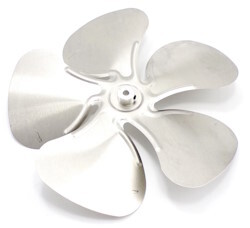
Fan blades and impellers in HVAC systems are rotating components that move air to circulate conditioned air, but they differ in design and application: fan blades are typically straight or propeller-like structures in axial fans, pushing air parallel to the rotation axis in a straight-line flow for high-volume, low-pressure scenarios, such as condenser fans in outdoor AC units that expel heat by drawing air through the coil.

Impellers (also called blower wheels or centrifugal wheels) are enclosed or semi-enclosed assemblies with multiple curved blades—most commonly forward-curved (squirrel-cage style for residential furnaces and air handlers), backward-curved, or airfoil types—that draw air in axially and discharge it radially at 90 degrees, generating higher static pressure to overcome duct resistance and efficiently force air through filters, coils, and ductwork in indoor blowers.

Fan Blades, Wheels & Impellers
Gaskets0

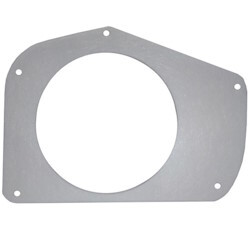
Gaskets for draft inducers, convection blowers and air handlers.

Gaskets
Ignition Controls0

Ignition controls in an HVAC system (primarily gas furnaces, boilers, and some packaged units) are electronic modules or circuit boards that manage the safe and reliable ignition sequence for the burners, replacing older constant pilot lights with more efficient methods. They coordinate components like the inducer blower for pre-purge, gas valve opening, igniter activation (via spark from direct spark ignition or glow from hot surface ignitor), flame sensing/proof, and shutdown if flame fails to establish, preventing unsafe gas release while ensuring proper heating operation.

Common types include hot surface ignition (HSI, most prevalent in modern furnaces where a silicon carbide/nitride element glows red-hot to ignite gas), direct spark ignition (DSI, using an electrode to create a spark directly at the burners), intermittent pilot (spark lights a temporary pilot flame first), and older standing pilot systems (now rare due to inefficiency).

Ignition Controls
Limit Controls, Temp Switches & Timers5

Limit switches in HVAC systems are temperature-sensitive safety devices (often bimetallic or thermal cutoff types) that monitor internal temperatures and open or close electrical circuits to prevent overheating or control component operation. In gas furnaces, the primary high-limit switch shuts off the burners and gas valve if the heat exchanger or plenum exceeds safe temperatures (e.g., due to restricted airflow, dirty filters, or blower failure), while a fan-limit switch (or auxiliary limit) activates the blower once the heat exchanger reaches a set temperature for efficient air distribution and turns it off after cooling to avoid blowing cold air.

Additional types include rollout limit switches (which detect flame rollout outside the burners for extra safety) and manual-reset versions that require intervention after tripping, ensuring protection against fire hazards, equipment damage, or unsafe conditions; in electric furnaces or air handlers with heat strips, similar limit switches protect against overheating of heating elements.

Limit Controls, Temp Switches & Timers
Miscellaneous4

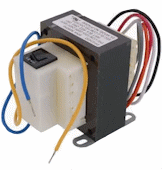
Here you'll find miscellaneous parts like transformers, electrical parts, wiring harnesses and other random parts we couldn't fit into a specfic category. 

Miscellaneous
Mounting Brackets & Supports3

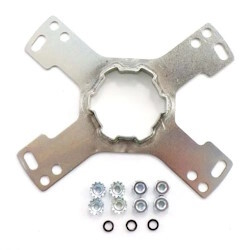
Here you'll find universal and OEM mounting brackets for motors, air handlers and blowers.  

Mounting Brackets & Supports
Pilot Light Assemblies0

A pilot light (also known as a standing pilot light) in an HVAC system—specifically older gas furnaces—is a small, continuously burning flame that serves as a constant ignition source for the main burners. When the thermostat calls for heat, gas flows to the burners, and the pilot light ignites it to produce the combustion needed for heating, eliminating the need for manual lighting while working with a thermocouple or similar safety device to shut off gas flow if the flame goes out and prevent unsafe gas buildup.

Modern HVAC systems have largely replaced standing pilot lights with more efficient electronic ignition methods like hot surface igniters or direct spark systems, as pilot lights consume extra gas even when the furnace is off and are found mainly in furnaces installed before around 2010.

Pilot Light Assemblies
Vacuum & Pressure Switches0

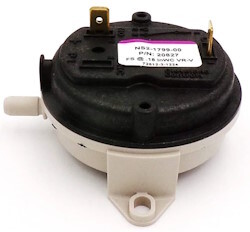
Pressure switches (also called draft pressure switches or furnace pressure switches) and vacuum switches in HVAC systems are safety devices that monitor air or fluid pressure levels to ensure safe and proper operation, typically by opening or closing an electrical circuit at preset thresholds.

In gas furnaces and induced-draft systems, they primarily sense the negative pressure (vacuum) created by the draft inducer blower to verify proper venting of combustion gases before allowing burner ignition—preventing dangerous backdrafting or carbon monoxide buildup if the vent is blocked, the inducer fails, or airflow is restricted—while in air conditioning units, high/low refrigerant pressure switches protect the compressor by shutting down the system if pressures become too high (overcharge/blockage) or too low (low charge/leak).

Vacuum & Pressure Switches
sidebar:

Need help finding the correct blower or fan kit for your fireplace? Let our experts help you track down the correct replacement blower, fan kit or part for your application. We typically only need the fireplace or stove's make and model to determine exactly what you need. This information can usually be found on gas fireplaces by removing the lower access panel and finding your fireplace's name tag or identificaton card. Wood inserts will often times have the same identificaton card, while freestanding stoves and others might have this information printed on a rear panel or door.

Once you've located your fireplace's brand and model information, simply use the Find Your Blower tool above, or the Help Find My Blower at the top of the page.

Help Find My Blower

Customer Reviews

Featured Brands

Fast Shipping

More Information*

Customer Testimonials

More Information*

Secure Checkout Guarantee

More Information*

30-Day Free Returns

More Information*
to top